Hawaii Real Estate & Community News

March 23, 2017

Have you been struggling to get your offer accepted?


Have you been struggling to get your offer accepted? 

A lot of my clients are first time home buyers with low down payment. It is definitely possible to buy a home with 5% down or less. The trouble is that the current market demand is far out weighing the supply. Every new listing is generating multiple offers and new record sales prices for the condo building or neighborhood.

The Real Estate process can take weeks, months, or even years. Some buyers have the ability to buy right away, they know what they want and their desired property is available. Others struggle to find the right property and properties that fit their needs are few and far between.


When I work with new home buyers with low down payment I tell them, If you are serious buyers looking to get into a home you should be prepared to write between 5-10 offers on average. If we happen to get an offer accepted within the 1st 5 offers we got lucky.

There are a few reasons why:

  1. Competition – Most 1st time home buyers fall within the $300,000 - $500,000 condo/townhome market. The baby boomer generation is currently in the process of selling their large single family homes and downsizing. They are taking the equity they have built up for the last 20-30 years and are becoming strong, all cash condo buyers. These buyers added to the investors who are always looking and the millennials looking to buy their 1st home has created intense competition. On average I have seen between 8-10 offers on well priced condos in town or townhomes between Pearl City and Kapolei.
  2. Price – New listings coming to market are being listed at prices that will set new highs for a building or neighborhood. As a 1st time home buyer with low down payment it is very hard to compete for these properties because you don’t have the ability to overbid. Sellers are not willing to work with low down payment offers if they think the appraisal will come in short and they have the ability to work with large down payment offers or all cash offers.
  3. Time frames – As a new buyer you may want to take all the time you can to do inspections and think about the property. The issue is that sellers want to close as soon as possible. If you ask for a two week inspection period and the seller has another offer that is willing to have a one week inspection period you will most likely lose out if all other things are equal.

It takes time to get comfortable with the real estate process and time to feel out the market. I am happy to spend the time showing properties and writing the offers necessary for my clients but I want them to be mentally ready for the process as well. It can be discouraging at times but the end result is worth the time and the effort.

If you are a buyer with low down payment there are other ways to become a stronger buyer. See my blog post below:

Tips for Buying a Property With 5% Down Payment

Posted in Buying a Home
March 6, 2017

What Is This Home Worth?

What should I sell my home or condo for? How much should I offer?

Realtors are constantly asked about the price/value of a home or condo. Most times price is driven by the Current Market Trend, Location, Neighborhood, Age, Condition, and any Improvements Made. Realtors use the most recent comparable properties “Comps” to come up with a range of values for clients.

Although the items listed above are important to determining price they are not the only factors. Below are some things to think about when thinking about purchasing or selling a home that also affect price. Many times Time is a key factor.

  1. As a buyer, a property may be worth more to you than someone else.
    1. Have you lost out on multiple properties in the past? Are you working with low down payment? It may be worth a little more to you to get into a property now and save time during a long home search in the future. The faster you find a property the longer your property can appreciate before your next real estate purchase. Time = Money
    2. Are you having twins and need extra space? If this home is hard to find and fits your needs it might be worth more to you than the next buyer.
    3. Is this home move-in ready? To a not so handy person a move-in ready property might have added value.
    4. Will this home be the home you retire in? The lifestyle a home affords gives added value to a home.
    5. Is this home close to work? Time = Money and commute time is no different
    6. Is this home in a great school district? It might be worth more to a family than a single person
  2. As a seller, time plays a part in price. Once again Time = money
    1. Do you want to list your property on the high side? This option may mean it takes longer for your property to sell. If you price too high, then you might need to consider a price reduction a few weeks after listing. The longer a property sits the less “buzz” there is for marketing the property.
    2. Do you want to sell your property fast? Listing below the market should generate multiple offers and offers which can close quickly and timely. You may leave some money on the table though if you price too low and there is less of a bidding war than expected.
    3. What is the right number? The right number will generate multiple offers in a reasonable period of time. Once again this is subjective to what the owner feels is reasonable.
  3. Differences in Price
    1. Preference from person to person may differ greatly and there are always 2 ways to looking at features of a home.
    • Diamond Head view = direct morning sun
    • Ocean view = direct afternoon sun
    • High floor = great view & long elevator rides
    • Low floor = no view & stairway access
    • Single story home (convenience) vs 2-story home (space)
    • Old construction (character) vs New Construction (modern)
    • Pool = positive for teenage kids or negative for toddlers
    • The list goes on ……….

Think about these items the next time you're pricing out a property. Also remember the old cliche that holds true in Hawaii - "You'd rather have the worst home in a great neighborhood, than the best home in the worst neighborhood"

Posted in Buying a Home
March 3, 2017

How Much Down Payment Do You Need To Buy In Hawaii?

How Much Down Payment Do You Need To Buy In Hawaii?

When talking to many 1st Time Home Buyers one of the questions they always ask is “How much down payment do I need?” There are still home buyers out there that think they need 20% down payment. In Hawaii, because of our home prices it is very rare to see a 1st time home buyer put down 20% (unless they get gift funds from family). Waiting to buy with 20% down will take years to save up due to the high cost of rent and home price appreciation. Hawaii real estate is a moving train and it's better to get on the train early than to let it pass you by.

The general rule for down payment is: the more down payment you have the better your loan terms become and the stronger your offer looks to a seller. If you can put 15% down or 10% down you are ahead of most 1st time home buyers. The National Association of REALTORS released an article last month stating:

“For the past three years, the median down payment for first-time buyers has been 6 percent and 14 percent for repeat buyers, according to the National Association of REALTORS®’ Profile of Home Buyers and Sellers. Yet, when consumers are asked about the down payment amount they need to buy, 87 percent of non-owners say that a down payment of 10 percent or more is necessary.”

In Hawaii there are options for buying real estate with 5% down or less and many 1st time buyers take advantage of them. The first step to home ownership is getting educated and to get in touch with a loan officer that will take the time to go over your options. Down payment may be gifted depending on your loan program which makes home ownership even more attainable.

5% Down Payment – This is a very common option for 1st time home buyers in Hawaii. With less than 20% down payment some type of Private Mortgage Insurance will be required (Monthly Mortgage Insurance vs. Lender Paid Mortgage Insurance).

FHA Loan (3.5% Down Payment) – This option can be quite costly as there is both an upfront MIP (Mortgage Insurance Premium) and an annual mortgage insurance premium. More of a last resort due to the buyer’s profile, an FHA may be the only option for certain buyers to purchase now. Learn more about FHA loans

3% Down Payment – May be available to 1st time home buyers who go through a HUD approved home ownership counseling class. This is a great option if down payment is a concern.

1% Down Payment – This program is very limited and not offered by every bank. Essentially this is the 3% down payment loan mentioned above but the borrower only needs to bring in 1% of the down payment and the lender will contribute 2% as down payment assistance. This is limited to certain areas.

100% Financing USDA loan – This option is used my many 1st time home buyers looking is specific areas. Many times this loan is used on Oahu when looking to purchase further west, such as in Ewa Beach & Kapolei. Learn more about USDA Loans

100% Financing VA Loan – This loan is meant for both active duty and retired military. Low interest rates make this a great option for those eligible. Learn more about VA Loans

The first step in learning about your options is to get in touch with a lender. After taking just a few minutes to learn about your situation and your real estate goals I can get you in touch with the right loan officer to fit your needs. We work with various lenders and loan officers which specialize in the loans mentioned above. Please contact us to take the 1st step to home ownership.

Posted in Buying a Home
Feb. 22, 2017

Starting Early: Buying Your First Home Right Out of College

Starting Early: Buying Your First Home Right Out of College

Many 1st time home buyers think you need to wait 2 years after graduating to buy a property. It’s not easy but college graduates may be able to purchase their 1st home right out of college.

I recently ran across a member of my old business club at UH Manoa. She is graduating this semester and has lined up a job after she graduates. Her parents are willing to help her out with down payment and she asked if she can buy and when to start looking.

The two largest hurdles of buying a home right out of college would be down payment and debt. As long as you can meet the requirements below you might be able to get pre-qualified to buy now.

  1. Your job must be a stable salaried job related to your college major. If you are going into an unrelated work field or your pay is based on commissions or bonuses you will need to wait to buy. As long as your job relates to your college degree, lenders are willing to use that income.
  2. Do you have down payment? There may be programs available to you which allow 0%-5% down payment. The down payment may be gifted and if your family is willing to help out this is the easiest and most effective way to do so.
  3. Do you have large debts? Things such as car payments, student loan payments, and credit card debt will dramatically affect your qualification. Student loan debt is usually the #1 reason college graduates wait years before buying their first property.

In 2015 Zillow reported the average age of a first time home buyer nationwide was 33 years old. The average age of first time home buyers has been rising and student loan debt is a large cause of this. The sooner you can get rid of debt and purchase real estate, the sooner you can start building wealth through equity in your home.

If you want to get educated on the real estate process and get in touch with a local mortgage loan officer contact me today and get ahead of all the other college graduates.

Posted in Buying a Home
Feb. 6, 2017

Tips for buying a property with 5% Down Payment

Most home buyers can purchase a property with 5% down payment assuming they will be living in the property and it will be their principle residence. We help a lot of buyer purchase with 5% down and especially in Hawaii many of these buyers are 1st time home buyers. The process is not easy and can take on average around 3-5 offers before getting an offer accepted. Many times buyers are up against 1st time home buyers with larger down payment, investors with large down payment, and all-cash offers. Here are a few tips to consider when looking to buy a home with 5% down.

  1. Work with a good loan officer – Know exactly what you can qualify for and find out all of your options. Ask if you qualify for the Mortgage Credit Certificate (MCC), a program that gives 1st time home owners a tax credit equivalent to 20% of their annual mortgage interest.
  2. Be aggressive on move-in ready properties - It’s hard to find properties that don’t need any improvements. Move-in ready properties are very competitive and you will be sure to have competition from investors looking for a property they can rent out immediately without any work. All things being equal a seller will usually work with an offer with the highest down payment. Be aggressive up to your comfort level. Remember, the longer it takes to get into a property the more the market will appreciate and will cost you money.
  3. Consider properties that may need updating – Properties that are not move-in ready usually stay on the market longer and are less competitive. Look for properties that have been on the market for a while. You may need to replace the floors, paint, and update the kitchen and bathroom but everything can be done for the right price. Look at properties below your target budget and get quotes for the items you need to fix during your J-1 inspection period.
  4. Expand your search – Are you looking for a 2 bed / 2 bath / 2 parking condo in the heart of town for your first property? Once again these properties will be quite competitive. You may need to look outside your target area and compromise on some of your search criteria.
  5. Look for ways to become a stronger buyer – More down payment is the easiest way to make your offer look more attractive to the seller. Save or search for additional down payment such as gift funds. There are also ways to make your offer more attractive such as shortening inspection timeframes or deleting items such as cleaning which is typically a cost to the seller.
Posted in Buying a Home
Jan. 18, 2017

Private Mortgage Insurance (PMI) - The good, The bad, and your options

Buyers tend to hear the words “mortgage insurance” and jump straight to negative thoughts. They don’t want to pay it and will try to avoid it at all costs. The truth is that mortgage insurance is one of the few ways you can purchase a property with less than 20% down.

What is Mortgage Insurance?

Private Mortgage insurance is insurance that covers a Lender “Bank” in case a borrower defaults on their loan. When someone buys a home and takes out a mortgage (loan), the lender needs to ensure that they have a plan B in case you default (don’t pay). If you put 20% down, you already have that money tied up in the property. If you don’t pay your mortgage the bank can take back your property as well as keep the 20% you put down.

When buyers put less than 20% down the bank or lender is taking a risk. If you don’t pay your mortgage and the bank takes back the property there may be costs for them to fix the property due to deferred maintenance, hire a realtor to market and sell the property, or the take the property to auction. With all risks there is an insurance help offset it and in this case that is mortgage insurance. The lender passes this cost on to the borrower and it is something that must be accounted for in your total monthly payment. Mortgage insurance is calculated based on several factors including % of down payment and credit score. The more down payment you have, the less the insurance will cost.

Monthly Mortgage Insurance

There are two main options when it comes to mortgage insurance. The monthly option is an extra monthly payment specifically for insurance that is paid on top of your mortgage. This payment will depend on your loan amount as well as the amount of down payment. Typically this option leads to a higher monthly payment in the first few years as compared to the lender paid option. The good thing about this option is once your loan amount gets to 78% of the value of your home (LTV) then the monthly mortgage insurance payment goes away. This means that your payment now becomes less expensive than the lender paid option.

This option is good if you have closer to 20% down payment or if you plan on keeping the property long term.

Lender Paid Mortgage Insurance (LMPI)

Lender Paid Mortgage Insurance or “LPMI” is a second type of mortgage insurance that some lenders may offer. The cost of the insurance is usually rolled into an adjustment in your interest rate. Depending on the amount of down payment this adjustment will be higher or lower (+.125% to +.625%). There is no extra monthly payment but this adjustment will cause your mortgage payment to increase. Typically this option leads to a lower monthly payment than the monthly mortgage insurance option at the beginning of your loan but the interest rate does not change. This means that at the point when your loan amount reaches 78% of the value of your property, the LPMI option becomes more expensive than the monthly option.

This option may be beneficial if you have a lower down payment (5%-10%) and you want to save money in the beginning. It may also be beneficial if you are not sure how long you will keep the property and may not see a benefit from the monthly mortgage insurance going away when your loan amount reaches 78% of the value.

There may be tax consequences associated with both options but please consult a loan officer or your CPA.

Which option is better?

When looking at loan options, I always advise clients to look at the purpose of the property and figure out how long they plan to live there or hold on to the property. If the property is just a starter home that they plan to keep for 2-3 years then the LPMI option might be best since they will have a lower monthly payment for the first few years. If the plan is to hold on to the property forever then the monthly mortgage insurance option might be a better to take advantage of the lower interest rates.

If you are interested in getting pre-qualified with a lender Contact Me today for a list of my preferred loan officers

Posted in Buying a Home
Jan. 17, 2017

Mortgage Rates Fall - Breaking 9-week rise

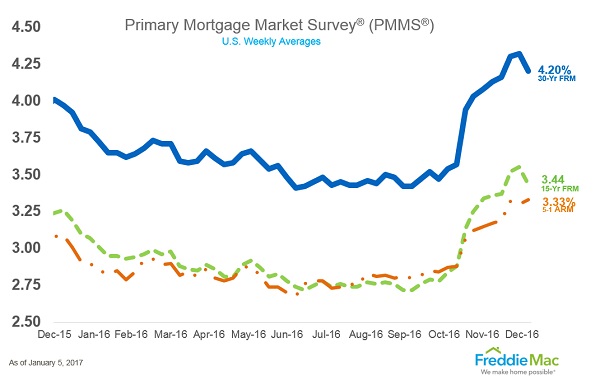
Looking to buy a property or invest in real estate? Interest rates rose following the presidential election and after nine straight weeks of increases, long-term U.S. mortgage rates fell this week. Mortgage buyer Freddie Mac said today the rate on 30-year fixed-rate loans declined to an average 4.20 percent from 4.32 percent last week.

If you've been waiting on the sidelines since the end of last year now is the time to jump back in. Contact Me today to schedule a a free buyer consultation.

Jan. 16, 2017

The Key to Real Estate Investment in Hawaii - 1031 Exchange

What is a 1031 Exchange?

When real property is bought and sold there are always tax implications. Through a 1031 exchange a real estate investor can sell their investment property and purchase “like-kind” property while deferring their capital gains tax. Like-kind means that if an investment property is sold, the investor must purchase another investment property, not a principle residence. This is one of the best strategies for preserving the value of the owner’s investment portfolio.

Why use a 1031 Exchange?

Especially in Hawaii, wealth is built through real estate. Paying capital gains tax after every sale of investment property forces investors to take a step back. By deferring your capital gains tax implications an investor keeps their buying power allowing them to purchase step-up properties. Many investors in Hawaii will purchase dozens of properties using 1031 exchanges. Estate planners can also help come up with strategies to help minimize the capital gains tax implications in the future when properties are eventually liquidated or transferred.

How Does a 1031 Exchange Work?

Once the investment property is sold the exchanger has 45 days to identify a “replacement property” and a total of 180 days to purchase their replacement property. The exchanger can identify several properties that interest them and even sell one property to purchase multiple properties.

Compare a sale vs. an exchange with the following assumptions:

  • An investor sells a property with no debt for $1,000,000
  • The property has been fully depreciated and has a tax basis of $100,000
  • The property has been owned for more than 12 months
  • Assume a combined tax rate of at least 25% (federal capital gains tax, depreciation recapture tax, healthcare tax, and state taxes)
 

1031 Exchange

Sale

Equity

$1,000,000

$1,000,000

Basis

$100,000

$100,000

Gain

$900,000

$900,000

Estimated Tax

$ NONE

$225,000

With the 1031 exchange the real estate investor can now use their $900,000 of tax-deferred gain to purchase a like kind investment property or several investment properties, compared to the conventional sale which leaves the seller with $675,000 after taxes.

Because of the 1031 exchange the investor's buying power is now $900,000 compared to $675,000. They now have the ability to look for a single family home instead of a condo.

If you are interested in more info Contact Me today!

Jan. 14, 2017

2016 End of Year Real Estate Market Update

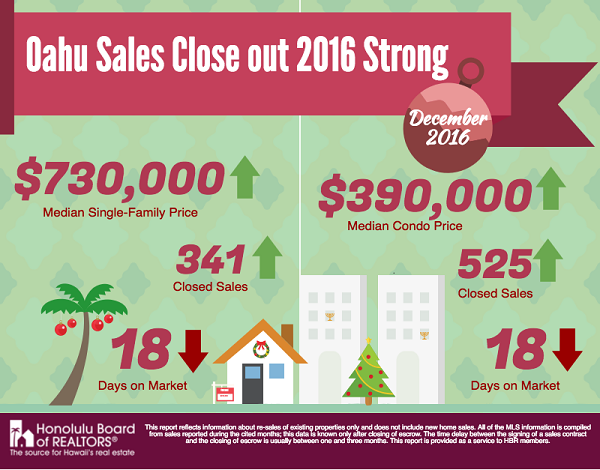
The December 2016 HBR stats were recently released and as predicted both Single family homes and condos finished at record highs. Inventory is still low which has been causing multiple offer situations for buyers. Especially for first time buyers it's important to consider the various strategies to get your offer accepted.

There are many ways to make your offer look stronger to a seller. Timelines can be adjusted, contingencies can be waived, or verbiage can be added to ensure the seller that you can close quickly and in a timely manner. Keep an eye out for my Tips for Millennial and First Time Home Buyers.

Click here to see the market report and past HBR stats.

If you're in the market to buy and need info on how to become a stronger buyer, feel free to Contact Me.

Posted in Real Estate News
Jan. 12, 2017

Why You Need A Buyer's Agent For New Developments

Are you thinking about purchasing a new development such as Howard Hughes’ Ward Village condos, or 900 Green Valley? Or one of the new builder developments such as D.R. Horton’s Hoopili, Castle & Cooke’s Koa Ridge, Haseko’s Hoakalei, or Gentry’s SEABridge?


Are you using a realtor?

Your right as a buyer is to be able to be represented. If you’re not you may be making the process harder on yourself.

If you walk into a sales office for a new condo, townhouse, or single family home development you will be greeted by a sales agent and they will ask you if you have a realtor. If you don’t have a realtor they will be more than happy to walk you through the process. The sales agent may seem like they are there to help you but they are first and foremost there to sell the project and they represent the developer. They will help give you information about the project, get you in touch with a project lender, and help you apply for the building or lottery.

Although they may seem like they have your best interest in mind their first commitment is to the developer and your interests come second. For this reason they won’t tell you about any flaws with the home or building, or reasons why it might not be the right fit for you. Here are a few reasons to always use a buyer’s agent when looking at new construction.

A buyer’s agent will get you in touch with the right project lender/loan officer

A good agent will select the right loan officer for you depending on your buyer profile and your personality. A good agent has several loan officers at their disposal depending on their buyer’s needs. A sales agent may just direct you to someone who is available at the sales office who may not be a good fit for you.

A buyer’s agent will give you the best shot at getting a unit.

The project may not use a lottery system and may sell units on a first come first serve basis. A buyers agent can notify you of new releases and help ensure you are one of the first people in line.

A buyer’s agent can help review Documents

Going back to the fact that a sales agent represents the developer, a good buyer’s agent will help review condo documents with you. The sales agent may just hand documents to you and tell you to review them. The declarations, house rules, and public report will tell you a lot about the project you are buying into. A good buyer’s agent will point out important items for you to be aware of. Some key questions to ask pertain to the following:

  • Maintenance Fees
  • Pet Policy
  • Parking Stall
  • Common Area Interest

Many buildings that are deemed “workforce housing” “affordable” or “reserved housing” have specific requirements and are under regulations regarding “shared appreciation” and “buy backs”. These are all topics that a buyer’s agent can give their unbiased opinion on.

Tracking Timelines

New projects have varying timelines. There are dates you must cancel by, turn in deposits by, submit approvals by, etc. all before you are even locked into a unit. When the project is completed there are dates you must submit your loan by, get your financing in order, sign your loan, and deposit your cash to close. Although a sales agent can help you with the process, they may be juggling hundreds of other things and you may get lost in the work they need to do. A buyer’s agent is committed to you. Our Hawaii Starts Here team has several people watching out for your best interest so you can rest assured you remain a high priority for us.


Posted in Buying a Home